WordPress · California

South Bay Living

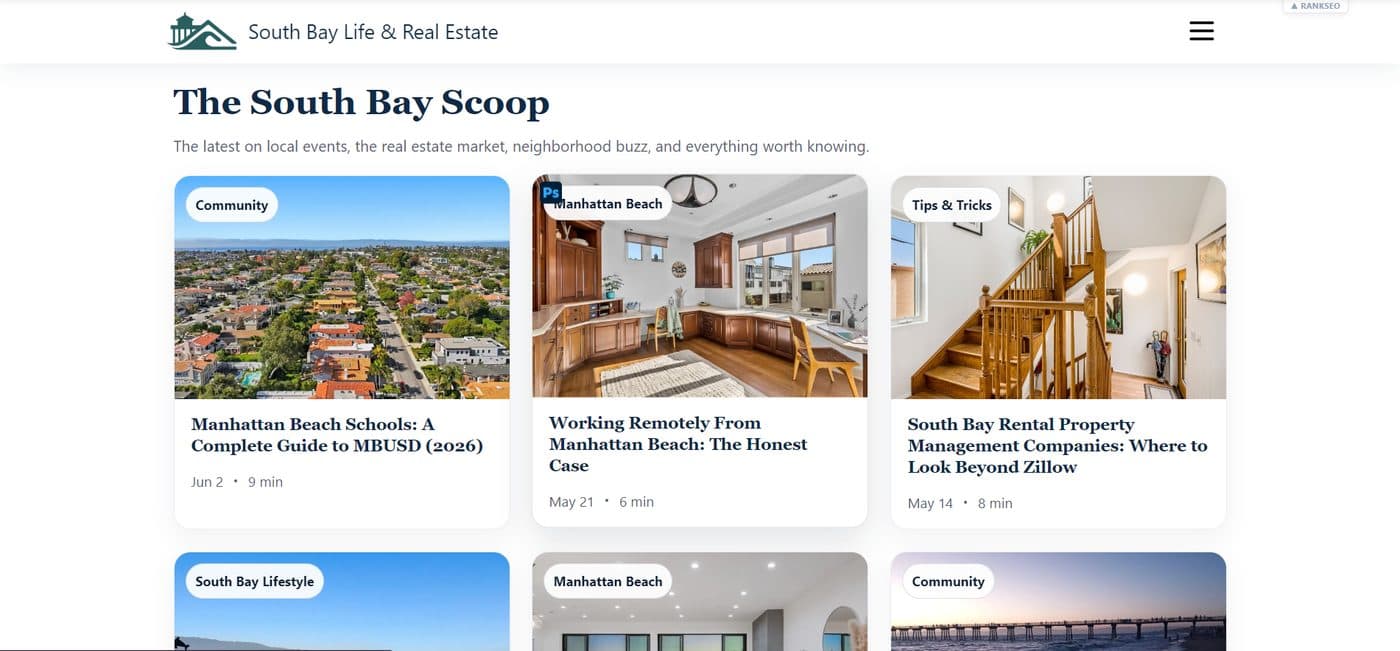
Static pages rebuilt as a site the owner can edit, with a real blog and a community calendar.

WordPressCustom child themeACFGutenberg
South Bay Living interface
What changed

The same job,
minus the manual part

Switch between how the work ran before, and how it runs now.

  • Static HTML pages, edited by a developer
  • A blog list that had to be updated by hand
  • Events maintained separately from the site
The build

How it was
put together

In the order it was built, and why each part exists.

  1. 01

    Preserve the design

    A lightweight custom child theme reproduces the original pages exactly, so nothing about the look changed in the move.

  2. 02

    Expose the editable parts

    Gutenberg and ACF surface the sections that should be editable, and only those, so the owner cannot accidentally break the layout.

  3. 03

    Make the content real

    The blog list pulls actual posts and single-post templates display meta and images properly, instead of being hand-maintained HTML.

  4. 04

    The calendar

    Community events run on a custom post type, alongside neighbourhood guides and seller resources.

The brief nobody enjoys

Converting static pages to WordPress usually means the design quietly degrades. The theme imposes itself and the client accepts a worse version of what they had.

The requirement here was the opposite: identical design, fully editable.

Built to survive updates

A child theme rather than a modified parent, so updates do not overwrite the work, and ACF for structured fields rather than free-form page builders.

Fast, responsive, and editable by someone who does not write code.

1:1

Design preserved

0

Developer needed to publish

3

Content types: posts, events, guides

Next

Want something
like this

The first call is a conversation about your process, not a pitch.

Next case studyWashworld Coin LaundryWeb design · Toronto