Hire for it
You carry the salary whether the work is there or not.
- Recruiting time before anything ships
- Paid through the quiet months too
- One person, one stack, and holidays
You sold the project. You do not want to hire for it, and you do not want a ticket queue in another timezone that answers in three days. This is the other option: one person, working under your name, who you can actually talk to.
Two of these you have probably tried.
You carry the salary whether the work is there or not.
You file a ticket and wait for whoever picks it up.
One developer, working under your name, who you can talk to.
Written as what it means for you, not as a service list.
White label WordPress, Shopify and custom web application work, delivered as yours. Your client never learns my name unless you want them to.
A number before the work starts, per project. No retainer to keep alive between jobs, and no hourly meter running while we talk.
Accounts opened in your name or your client name, the repository yours, credentials handed over. Nothing stops working if you stop calling.
White label WordPress maintenance when you need it: updates tested on a staging copy, offsite backups, malware cleanup, user audits, and a short monthly note you can forward.
Schema, indexing, Search Console and the location and service pages a local client needs, as part of the build rather than a separate engagement.
You message a person. The answer comes from the person who wrote the code, which is usually the difference between a fix today and a fix next week.
Four stages, in this order, every time.
Whatever you already have. The deck you sold with, a Figma file, or three paragraphs. Questions come back the same day.
What is included, what is not, and the number. Nothing starts until you agree to it, and the number does not move unless the scope does.
Each stage is something your client could look at. That keeps corrections cheap and keeps you able to answer when they ask how it is going.
Documentation, a walkthrough recorded for your team, and a fixed window afterwards for anything that surfaces. You deliver it to your client yourself.
All three were built end to end by one person, which is the argument.
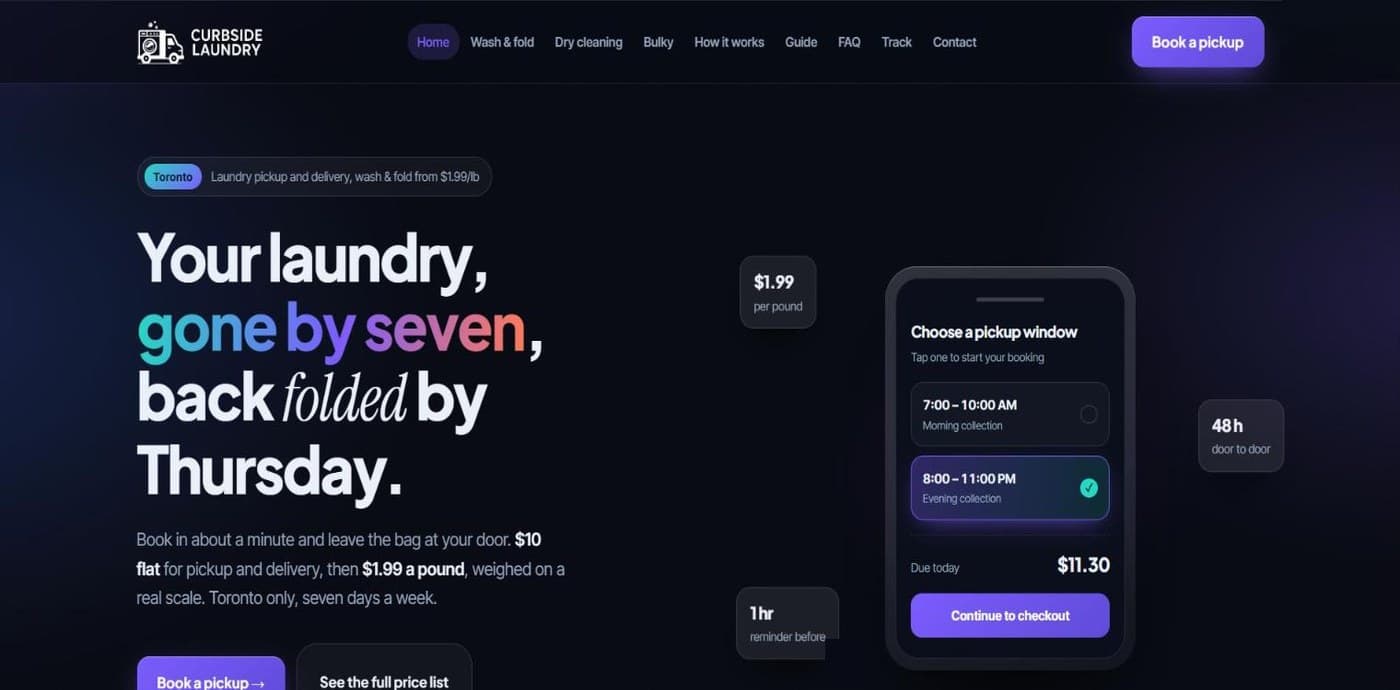
Every booking arrived by phone, driver routes were worked out by hand each morning, and nobody could say how many orders were open without counting them.
A booking flow for customers and an operations platform behind it: orders board, assignment queue, service areas, drivers and a driver portal, customers, communications, payments, promo codes, pickup queues, inventory, reports, and role based access. Payment runs in two stages, a deposit at booking and the balance captured once the load is weighed, because the final price is not known up front.
The owner stopped answering the phone to take bookings. 233 payments have been processed through it, with no refunds.
Not unless you introduce us. Work is delivered under your brand, commits and documentation carry no Rising Dot marks, and I do not contact your client or list them publicly without your written say so.
No. Every project is fixed scope and fixed price. If there is no work this month there is no invoice this month, which is the whole point of using a partner rather than hiring.
You do, or your client does, depending on how you sell it. Accounts are opened in your name from day one and the repository is yours. Nothing is licensed back to you.
Work is scheduled around your hours, not mine, and that is not a promise made lightly: it is how the existing clients in Toronto and California already run. Messages get an answer the same working day.
Yes, and that is a large part of the WordPress work. An audit comes first so you know what you are inheriting before you quote your client for it.
Tell me the stack, the deadline and what you have sold. You get scope and a price back, in writing, before anything starts.