Chicago, United States

Custom software development for Chicago businesses

Most of the work that reaches me from the States is the same shape: a service business running on phone calls and a spreadsheet, wanting the process behind the website fixed rather than the website itself.

  • custom software development chicago
  • custom software developer chicago
  • service business software chicago
  • custom web application development chicago
Plainly

What working with someone outside Chicago means

Chicago is Central time, which is the easiest American timezone to work with from here. Your morning is my evening, so a question asked at 8am is answered before your lunch rather than the next day.

The work is remote and always has been. There is no Chicago office, no local number, and this page does not pretend otherwise.

What is here instead is a platform running for a service business in another North American city, doing the job most Chicago enquiries describe.

The working day

When we actually overlap

Not a promise about availability. Clock arithmetic, which you can check.

March to November, Central Daylight Time8am to 12pm in Chicago6pm to 10pm in Pakistan
November to March, Central Standard Time8am to 11am in Chicago7pm to 10pm in Pakistan

Pakistan sits at UTC+5 and does not observe daylight saving, so the gap is ten hours for most of the year and eleven over your winter. Calls land in your morning. Work lands overnight, which is the part people actually like.

What changes

What is actually different about building for United States

Not the design. These are the parts that get quietly wrong when a build ignores where the customers are.

Stripe, and the two stage kind

US card processing including authorise now, capture later, which is what you need when the final price depends on something measured after the job.

Service areas by ZIP

Dispatch and routing built around the area a crew can actually cover, rather than a radius drawn on a map.

Sales tax that varies by line

Illinois rates differ by product and municipality. That belongs in the system rather than in somebody head at invoicing time.

Your stack, not a new one

If the office already runs on QuickBooks, Google Workspace and a scheduling tool, the build connects to those rather than replacing them.

Proof

The work that answers what you are asking for

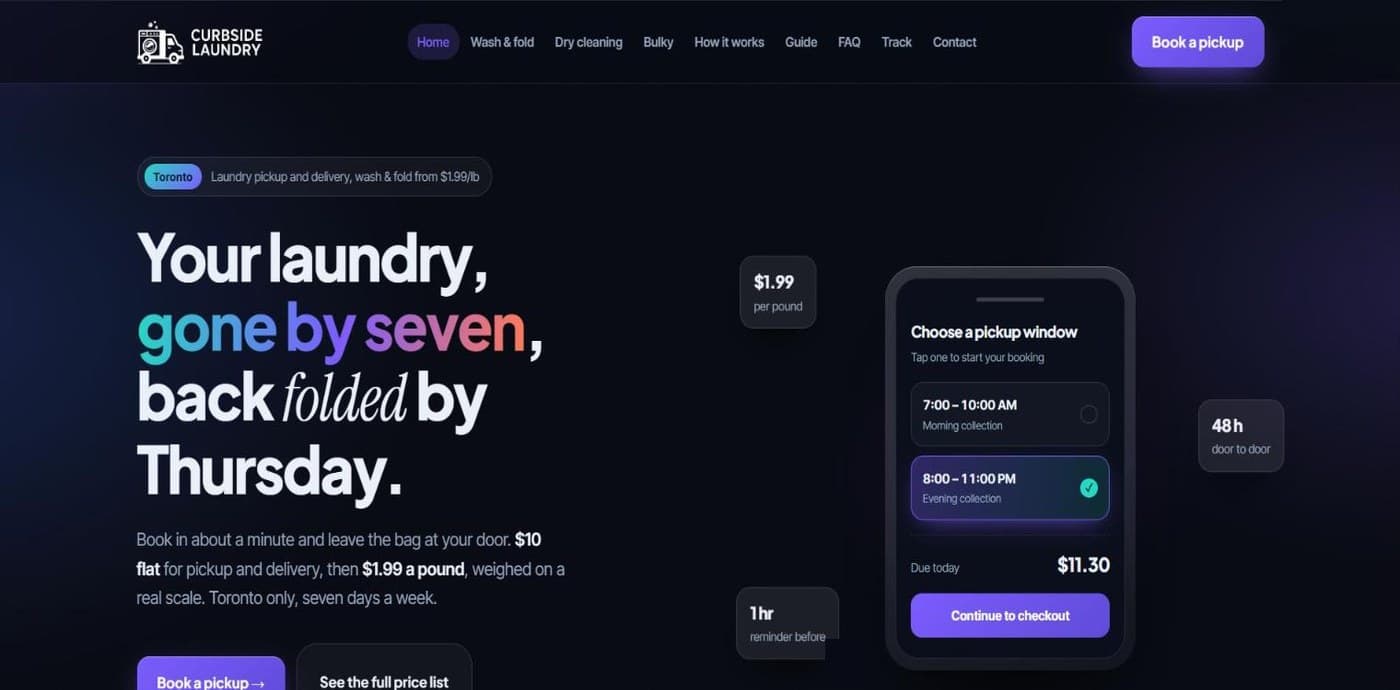
Curbside Laundry - a system Rising Dot built for a business in Chicago
The closest thing to what a Chicago service business usually asks for

Curbside Laundry

A pickup and delivery operation that took every booking by phone and worked out driver routes by hand each morning. It now runs on a 20+ module console: orders board, assignment queue, service areas, drivers and a driver portal, payments, promo codes, inventory and reports, all with role based access. Payment is taken in two stages, a deposit at booking and the balance once the load is weighed. 233 payments processed, no refunds.

Read the full case study
Before the first call

What people in Chicago ask

Because the work is remote either way. What matters is whether the hours overlap, whether you can reach a person, and whether the thing gets built. Chicago mornings are covered, you talk to the developer rather than an account manager, and the work that proves it is linked on this page.

Yes, including authorise at booking and capture the real amount later. That is built and running on the project linked above, which exists precisely because the final price was not known at booking.

You do. Stripe, hosting and the repository are opened in your name from day one, and the handover is written down rather than explained on a call.

Anything that can fail is logged and retried, and alerts go to a person rather than into a queue. What is answered out of hours and what waits until morning is agreed in writing rather than implied.

Tell me what is not working

The site, the store, or the process behind it. You get back what it would take and what it would cost, in writing, before anything starts.