The honest answer first
ServiceTitan, Jobber, Housecall Pro and CleanCloud are good products. If your operation fits one of them, you will get further faster by paying for it than by building anything. That is not modesty, it is arithmetic: a subscription is live on Monday and a build is not.
So the useful question is not "is custom software better". It is "is my business one of the ones a product cannot hold". There is a test for that, and it takes about a minute.
The one minute test
Look at the last twenty jobs you did. For each one, ask where the number came from.
If the price came off a list, or you quoted it once and it did not change, a product will hold your business. Booking, scheduling, invoicing, reminders: every product in the category does that, and does it well enough.
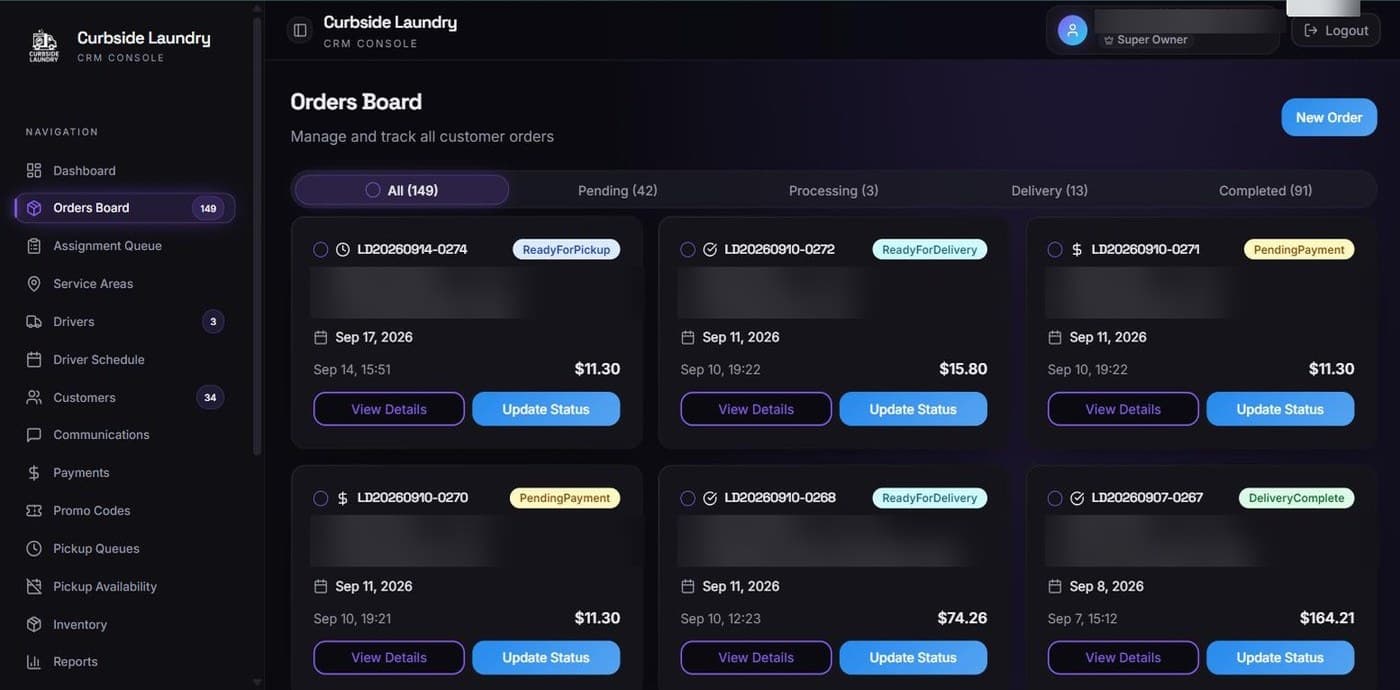
If the price was only known after somebody weighed something, measured something, or looked under a sink, keep reading. That single fact is the most common reason a product stops fitting, and it is the reason the platform in the screenshot above exists. If you want the longer version of that argument, off the shelf against custom sets the two side by side.
Where products actually break
There are three, and only three, situations worth building around.
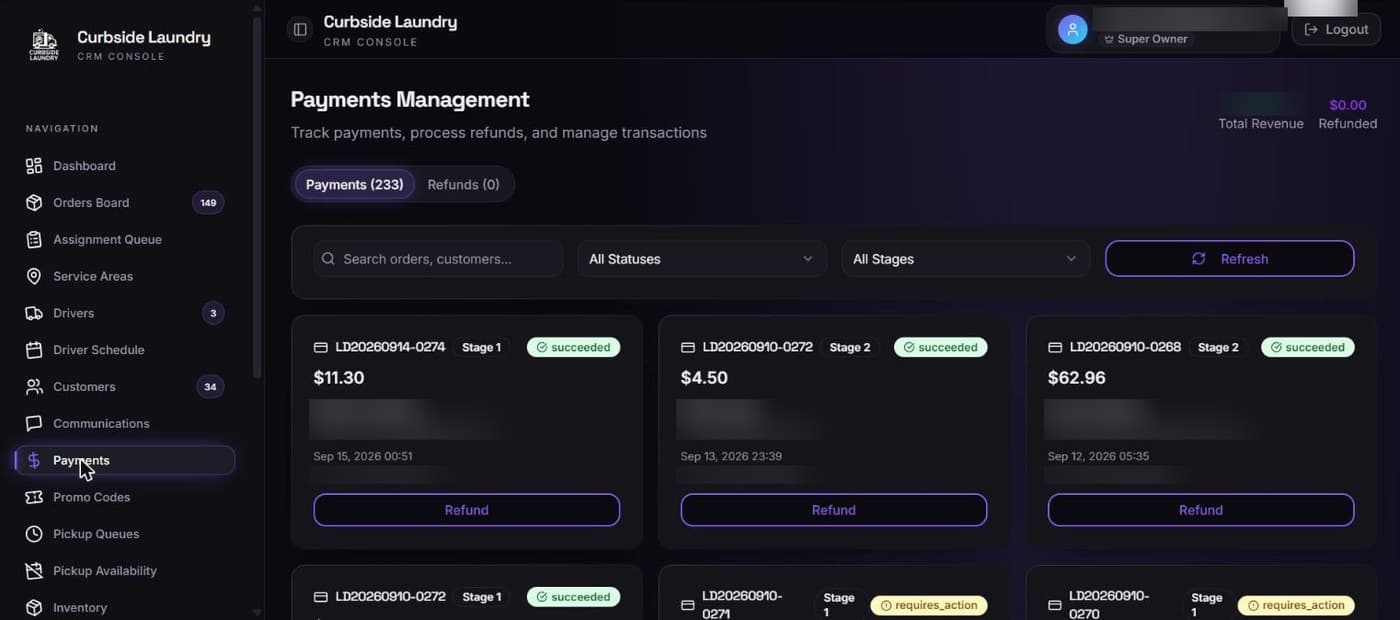
The price is decided later. Products want a price at booking, because that is what a checkout is. When yours depends on a weight or an inspection, you end up authorising one amount and invoicing another by hand, for every single job, forever. A pickup and delivery laundry we built for takes a deposit at booking and captures the balance once the load is on a scale, and tags every transaction stage one or stage two so the books can be read afterwards. 233 payments have gone through it with no refunds. That behaviour is not a setting in any product in that category.
The assignment rule is yours. Every product has an opinion about how work gets given out. When yours differs, the workaround is a spreadsheet beside the product, and now you have two systems and one of them is lying to you. If you already keep a second list, you have found your answer.
The customer flow is wrong for you. Booking screens and portals are where your business meets its customer. Products let you change the logo. If the flow itself loses you bookings, there is no setting for that.
What building actually costs
More than a subscription in year one, and usually less by year three if the thing is genuinely used. Anyone who quotes before asking how your work happens is guessing.
The part people underestimate is not the money, it is ownership. Somebody has to be responsible for the software afterwards. That is either a care arrangement or a person on your side, and pretending otherwise is how custom software earned its bad name.
The part people undervalue is that you own it. No per seat fee as you hire, no feature removed in an update, no export that mangles three years of history.
How to decide this week
Write down the one thing the product will not do. One sentence.
If a support article answers it, buy the product and spend the money you saved on marketing. If nobody can answer it, that sentence is your specification, and it is worth an hour of somebody's time to price properly.